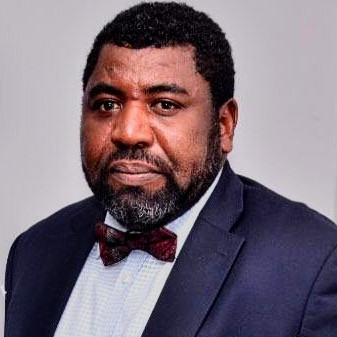
A Jean Monnet Professor of Strategy and Development at the Commonwealth Institute of Advanced and Professional Studies (CIAPS), Anthony Kila, has advised those he described as current architects of power who hold the reins of authority, policy, and societal norms to re-adjust their lives in a manner that would leave lasting legacies for the youths often regarded as the “leaders of tomorrow.”
Speaking on “Dawn After the Doldrums: Political Reorientation of Adult Nigerians as an Imperative for a Better Nigeria” at a webnair Daily Query (a digital newspaper described as liberal, independent, and committed to fair, balanced, and progressive ideas) hosted, Prof. Kila who serves as the Pro-Chancellor and Chair of the Governing Council of the Michael and Cecilia Ibru University (MCIU) asserted that Nigerian youths have not lived up to expectation as the much anticipated “leaders of tomorrow,” not due to a lack of willingness or ability on their part “but rather because the current architects of power – those who hold the reins of authority, policy, and societal norm – have consistently fallen short in exemplifying the leadership qualities and civic virtues essential for nurturing a thriving, modern democratic society.”
According to the erudite professor, “this persistent disconnect underscores the urgent need for a paradigm shift—one that involves not only empowering the youth but also inspiring the older generation to serve as genuine role models and mentors in the journey toward national development. It is time, therefore, to shift our gaze.
“Nigeria’s governance crisis is not mainly a youth issue. It is, in reality, an adult problem – a crisis of perspective among those who vote, govern, and influence public life. Although we have a large youth population, what Nigeria needs, in my opinion, is not another campaign of political evangelism aimed at the young, but a reorientation of the adults who dominate the public sphere and shape the nation’s future.
“One of the most conspicuous yet often overlooked manifestations of societal stagnation is the pervasive drum of Civic Immaturity. Many adults in Nigeria have endured decades marked by dictatorship, transitional phases, and the advent of democracy, yet they have not fully embraced or internalised the core principles of active and participatory citizenship.“
He noted that over time, “We have come to accept dysfunction as a norm; corrupt practices are sometimes mistaken for ingenuity, impunity is erroneously perceived as strength, and tribal loyalties are often mistaken for true patriotism.
For too long, the political elite and the general populace have been ensnared in a monotonous rhythm – a politics dominated by personalities rather than substantial policies and governed by patronage rather than principled governance.
“This collective civic immaturity has fostered a society where adults, not youths, romanticise strongmen, excuse mediocrity, and reward deceit. We are a people who often complain about poor governance but celebrate those who manipulate the system when it suits us. We call for reform, yet resist the discipline that reform demands. The result is a democracy of appearance without substance, elections without accountability, and progress without purpose,” he posited.
In an attempt to clarify why a reorientation has become imperative, he was quick to say unequivocally that “in this context, reorientation does not entail moral sermons or patriotic slogans or jingles broadcast on radio and television. Rather, it signifies a purposeful and methodical process of education and engagement designed to transform how adults perceive notions of power, responsibility, and the collective good.”
In his words, “true political reorientation must be rooted in honesty—an honest reckoning with our history, acknowledging our failures, and confronting our complicity in past and present injustices. Adults must be encouraged to pose more profound and constructive questions: instead of asking, “What tribe or religion is that person?” we should inquire, “Which policies genuinely enhance lives?” Rather than seeking “Who is my kinsman in power?” we must ask, “Who demonstrates competence and accountability?”
To Kila, “such a shift demands patience, conviction, and a shared commitment to truth, fostering a society where integrity and service become the guiding virtues in our political landscape.”
The one-day webnair put together by the Daily Query management led by Dr Chuddy Oduenyi, who also teaches at Pan Atlantic University Lagos, was moderated by Babajide Bodede,a lawyer, author and Principal Partner at Lawfields Solicitors, and well attended by other professionals including Prof. Udenta O. Udenta, a literary scholar, author, and human rights activist, who was the keynote speaker. Other speakers included Alhaji Rufia Mungonu,a businessman and former governorship candidate in Borno State and Comrade Ignatius Ozoilo,a lawyer and Convener of Summit of Nigeria Think-Thank in the UK.
The webnair is the debut of various engagements that Daily Query – www.dailyquery.com.ng – intends using to harness opinion and ideas that can contribute to improving Nigeria’s democracy.
– intends using to harness opinion and ideas that can contribute to improving Nigeria’s democracy.
– intends using to harness opinion and ideas that can contribute to improving Nigeria’s democracy.