By Agbeze Ireke Kalu Onuma, AI-KO
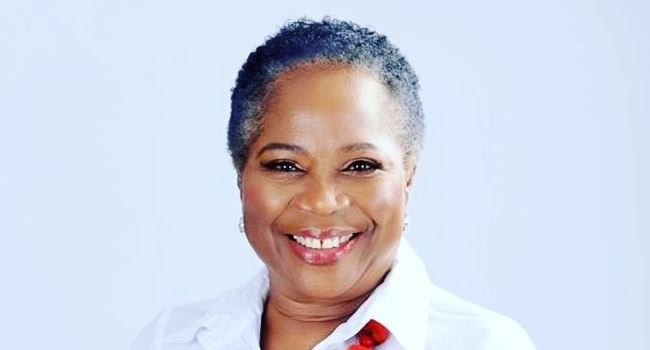
When Kemi Badenoch rose to become a leader within the British Conservative Party, I, like many others, felt a genuine and profound sense of pride. It appeared to be another barrier broken, another ceiling cracked open for those who share a similar heritage. This initial admiration prompted me to pay closer attention to her political journey and, by extension, to the intricate dynamics of the British parliament. Even as her remarks about Nigeria began to surface, I noted them with a mix of curiosity and unease, choosing to reserve judgment in the hope that there was greater depth and nuance behind the provocative soundbites. Then, just a few days ago, the revelations regarding her unverified and misleading claims about her educational background emerged in the headlines. Strangely, the impact of this news struck me with a force I had not anticipated, leading me to a deeply personal and troubling question: Kemi, why? Why feel the need for this? Must one be Oxford-trained, Yale-certified, or draped in borrowed prestige to validate a position you have already earned and now hold?
Kemi, why? Why feel the need for this? Must one be Oxford-trained, Yale-certified, or draped in borrowed prestige to validate…
This compulsion felt painfully and intimately familiar – a disheartening echo of a pattern I have observed time and again in Nigerian public life: the casual bending of truth, the inflationary impulse regarding credentials, and the weaponization of heritage for immediate political gain. That recognition, more than any personal bitterness, is what truly unsettled me. It was a deep intellectual and ethical discomfort that an individual who had already broken through so many structural impediments still felt compelled to reach for such embellishment. To witness her ascent within British politics was initially to feel a flicker of diasporic pride, seeing a woman of Nigerian origin claim a space historically reserved for others. That pride, however, was swiftly tempered by a profound unease, a growing sense that the narrative propelling her rise was a carefully curated fiction, one that relied on a condescending caricature of the very culture that contributed to her formation. This examination is not an attempt at character assassination; it is an essential exercise in character interrogation, demanding that those who preach rigorous standards be held to them most of all. If one claims the moral high ground, they must not be discovered building it upon a swamp of half-truths and evasions.
If one claims the moral high ground, they must not be discovered building it upon a swamp of half-truths and evasions.
The core of my argument is that Kemi Badenoch has meticulously constructed a formidable political identity, but one that rests uneasily upon a trilogy of questionable pillars: selective storytelling, academic embellishment, and a persistent, damaging tendency to caricature her ancestral homeland. These are not minor peccadilloes or harmless political flourishes. Rather, they point to something more systemic and troubling: a deeper failure of integrity at the very heart of her public persona. To begin with, her reliance on selective storytelling has been a defining feature of her rise. Like many politicians, she has leaned heavily on biographical narratives to frame her political brand, but unlike the straightforward accounts of hardship and perseverance that often inspire, her stories appear meticulously curated to emphasize certain struggles while downplaying or distorting others. While narratives are undeniably powerful tools in politics, when the line between fact and embellishment blurs, trust begins to erode. Scholars of political communication, such as Murray Edelman, have long argued that political myths, once exposed as manipulative, can backfire catastrophically and undermine the credibility of the storyteller. Badenoch’s selective use of her Nigerian background – invoked when it suits her ideological purpose, dismissed when it does not – fits this pattern uncomfortably well.
The second pillar, that of academic embellishment, has proven even more damaging to the edifice of her credibility. The controversy surrounding her claims of elite academic training – claims that appear exaggerated or entirely unsubstantiated – strikes at the very heart of political credibility. In a society like Britain, where educational pedigree still carries enormous symbolic weight in public life, such embellishments are not trivial errors; they are calculated attempts to signal legitimacy, competence, and belonging within the political establishment. Yet, as numerous commentators have pointed out, this mirrors a familiar and lamentable trope in Nigerian political culture, where inflated résumés and dubious certificates have become a cliché of public deceit. The Nigerian novelist and critic Wole Soyinka once lamented the pervasive “corrosion of truth” in our public life, and it is difficult not to see stark and disappointing echoes of that same corrosion here. Badenoch, who by virtue of her position should know better, risks importing into British politics the very practices that Nigerians themselves have long decried and suffered under.
The third and perhaps most ethically troubling pillar is her consistent caricaturing of Nigeria, her ancestral homeland. Time and again, she has reached for dismissive or disparaging portrayals of the country in her speeches and interviews, often deploying it as a simplistic foil to contrast with what she frames as superior British values or institutions. While a clear-eyed critique of one’s homeland is not only valid but sometimes necessary for progress, her rhetoric has consistently lacked any meaningful nuance, flattening a nation of immense complexity and resilience into a one-dimensional caricature of dysfunction. This tendency is not without serious consequence. As postcolonial scholars like Edward Said and Ngũgĩ wa Thiong’o have powerfully shown, the repetition of such reductive narratives does not merely describe a situation; it actively reinforces pernicious stereotypes and legitimizes external prejudices. For a politician of Nigerian descent, wielding these caricatures for domestic political gain is not only ethically questionable but also deeply damaging to the millions of Nigerians who continue to struggle daily against those very stereotypes in global discourse.
Taken together, these three pillars – storytelling that bends toward myth, credentials that strain credibility, and rhetoric that caricatures rather than clarifies – form the essential scaffolding of Badenoch’s political identity. But we must remember that scaffolding is not the same as a foundation. A true foundation must be solid, grounded in unassailable truth and integrity. As Chinua Achebe so profoundly observed, “One of the truest tests of integrity is its blunt refusal to be compromised.” By contrast, Badenoch’s story appears compromised at its very origin, raising disquieting questions not only about her personal integrity but also about the kind of political culture she seeks to foster and normalize. The issue, therefore, transcends one politician’s embellishments or rhetorical choices; it is about the broader implications for trust in public life itself. When leaders construct their identities on half-truths, selective narratives, and cultural caricatures, they erode the very democratic fabric they claim to defend. Integrity, as Achebe reminds us, is not negotiable. It is the non-negotiable bedrock of legitimate leadership. Without it, even the most formidable political persona will eventually crumble under the weight of its own internal contradictions.
The most glaring and documented inconsistency lies in the realm of academic myth-making. How far, one must ask, can a public figure stretch the truth before the fabric of their credibility irrevocably tears? Badenoch has repeatedly claimed that at the tender age of 16, she was offered a place to study pre-med at Stanford University, a story she employs to illustrate her prodigious talent and her parents’ sacrifices. Yet, this foundational anecdote collapses under the slightest scrutiny. Jon Reider, the former Stanford admissions officer for international students during that very period, has stated unequivocally that Stanford does not and has never offered a pre-med major. More damningly, he has confirmed that no Nigerian student was admitted with financial aid at that time, a crucial point given Badenoch’s suggestion of a partial scholarship. “Although 30 years have passed,” Reider asserted, “I would definitely remember if we had admitted a Nigerian student with any financial aid. The answer is that we did not do so.” The questions this raises are severe and unavoidable. Is it in any way plausible that a 16-year-old with only O-levels could bypass Stanford’s famously comprehensive and competitive application process? If this offer was indeed real, where is the documentation – the offer letter, the email, any tangible proof? Her steadfast refusal to produce evidence, opting instead for silence and strategic deflection, suggests a deeply troubling answer.
This pattern of self-aggrandizement is invariably achieved by using Nigeria as a rhetorical foil, a backdrop of supposed dysfunction against which her own narrative of escape and elevation can shine all the more brightly. One must ponder why a politician of Nigerian heritage feels compelled to consistently invoke her roots only to disparage them with such sweeping generality. She speaks of rejecting an admission to a Nigerian medical school, yet offers no verifiable details, seamlessly weaving it into the same narrative as the now-dubious Stanford offer. This appears to be not a mere exercise in recollection but a calculated political strategy. Her commentary extends far beyond her personal story into sweeping, undifferentiated generalizations. She has publicly declared that “not all cultures are equally valid,” a statement dripping with ethnocentric condescension, and has frequently mocked Nigeria’s governance and institutions for easy applause.
The message this sends is nothing short of catastrophic for the very people she might otherwise inspire. What does it mean for a young Nigerian girl, sitting in a classroom in Lagos, Kaduna, or Port Harcourt, to discover that a figure she admired – someone who looked like her, who shared her ancestry – may have paved her ascent not through unvarnished grit and integrity, but through biographical embellishments and a studied rejection of her own roots? For such a girl, the role model she thought she had found suddenly dissolves into a confusing mirage. And when the role model turns out to be a mirage, what remains? Does her story ultimately inspire, or does it deeply confuse and disillusion? The danger here is not abstract; it is profoundly pedagogical, cultural, and moral. For children and young adults, role models are not just aspirational figures; they are living templates for possibility. They embody the powerful idea that “if she can, then I can.” But when the scaffolding of that possibility is revealed to be built on half-truths and disavowal, the lesson transmitted is corrosive. It teaches a generation already navigating a world rife with disillusionment that success is not anchored in authenticity, perseverance, or intellectual honesty, but in myth-making, credential inflation, and strategic distancing from one’s own heritage.
“A diaspora leader who distorts truth or disavows heritage is like a bridge riddled with cracks: outwardly impressive, perhaps even celebrated, but fatally compromised at its core.”
This matter transcends one individual’s choices; it speaks to the symbolic economy of representation itself. Representation matters precisely because it carries a weight far beyond the individual. When Barack Obama rose to the presidency of the United States, his story of mixed heritage, his embrace of complexity, and his refusal to disown his Kenyan roots – even when politically inconvenient – sent a powerful message to millions around the world: that identity could be multifaceted without being disavowed. Contrast that seminal moment with Badenoch’s trajectory, where Nigeria is too often reduced to a caricature, and her own background is reshaped to fit the narrow contours of a British conservative narrative. The difference in the messaging they embody is stark and consequential. The implications ripple outward, affecting the diaspora in profound ways. For its members, Badenoch’s posture risks reinforcing the very stereotypes they struggle daily to dismantle. As one Nigerian commentator starkly put it, “Her disavowal of her heritage feels like a betrayal – not just of culture, but of the collective identity that binds the diaspora.” This sense of betrayal is not trivial. It feeds into a long-standing anxiety within African diasporic communities: the fear that visibility at the highest levels of power often comes at the cost of erasure or distortion of one’s origins. The sociologist Stuart Hall once argued that identity is not only about “being” but also about “becoming.” When the “becoming” is predicated on disavowal, the result is a fractured identity that alienates rather than empowers.
Moreover, the lesson for Nigeria itself is equally toxic. In a country already plagued by a political class that frequently inflates résumés, falsifies academic records, and weaponizes heritage for opportunistic ends, Badenoch’s example seems to validate the very practices that Nigerians have long condemned. It says, in effect: this is how the game is played, even abroad, even in the so-called bastions of democracy and integrity. For a society struggling to rebuild trust in its own institutions, such a message is devastating. It normalizes the corruption of truth not just at home, but on the global stage. One must consider the psychological toll on young Nigerians who are perpetually told to “work twice as hard” to succeed in a world that often doubts them. If the figures who ostensibly “make it” are revealed to have cut corners or distorted their stories, the incentive to pursue honesty and diligence weakens considerably. Why strive for authenticity when the rewards seem to accrue to those who embellish? This erosion of the moral compass is subtle but profound. It is what the philosopher Kwame Anthony Appiah might call a “corruption of aspiration” – a fundamental distortion of the very values that should guide ambition.
“The lesson transmitted is corrosive. It teaches a generation already navigating a world rife with disillusionment that success is not anchored in authenticity, perseverance, or intellectual honesty, but in myth-making, credential inflation, and strategic distancing from one’s own heritage.”
The poisonous legacy of such a persona, then, is not confined to one political career. It seeps into the cultural bloodstream. It tells young Nigerians, both at home and in the diaspora, that to rise, one must first shed or distort the very parts of oneself that connect to community, history, and truth. It teaches that heritage is not a resource to be drawn upon with pride, but a liability to be managed or discarded. And in doing so, it hollows out the very possibility of authentic leadership. At its core, this is not just about Kemi Badenoch. It is about the stories we choose to tell, the examples we set, and the futures we make possible – or impossible – for those who come after us. If integrity is compromised at the foundation, then the entire edifice of representation collapses, leaving behind not inspiration, but confusion, cynicism, and a profound sense of betrayal.
In Robert Frost’s “The Road Not Taken,” the speaker reflects on choices that define a life. In Badenoch’s case, however, the most telling story is not of the road taken, but of the road strategically avoided. She has consistently bypassed the path of transparency, the road of embracing complexity, and the route of building bridges rather than burning them. She has chosen, with apparent calculation, a path of political expediency over cultural authenticity, exposing a troubling blueprint for ascendancy where merit is secondary to a narrative of calculated erasure and projection. One must question if this is not a form of collusion with a system that rewards assimilation and punishes hybridity – a system all too willing to elevate “diverse faces” but only on the condition that they speak the language of denial and distance, effectively becoming a lethal political weapon against their own communities of origin.
This purported zeal for absolute integrity, however, creates a starker and more puzzling contradiction when held against the allegations surrounding her own academic narrative. How does one reconcile the image of a 15-year-old so morally rigid that she would publicly denounce a peer for cheating – an act of formidable courage and conviction – with the adult politician who appears, from available evidence, to engage in a form of intellectual dishonesty by inflating her own educational history? This dissonance is not trivial; it forces a difficult interrogation of her claimed principles. Is this rigid ethical framework selectively applied, reserved for judging the transgressions of others while remaining conveniently flexible when it comes to self-aggrandizement? The story of the exam cheat is presented as a foundational moment, a key to understanding her character. Yet, if the foundation of her own public biography is itself called into question, it risks reframing that entire anecdote not as a testament to integrity, but as a performative act that establishes a veneer of righteousness – a veneer that now seems tragically thin.
Furthermore, her recent assertion that she no longer identifies as Nigerian, while a deeply personal choice, becomes politically and ethically significant when viewed as the culmination of this pattern of disavowal. It is the final, logical step in a strategy that consistently uses her heritage as a negative reference point. This declaration, following years of caricatures, completes the rhetorical severing of ties. But it also raises a profound question about accountability: can one so publicly and repeatedly disparage a nation and its institutions, leveraging that disparagement for political capital, and then simply declare oneself free of any connection to absolve oneself of the damage those words cause? It suggests a desire to enjoy the political benefits of a curated “immigrant success story” without bearing the ethical burden of truthfully representing the complex reality of that origin.
This pattern is further complicated by her account of the “poverty of low expectations” she faced from teachers in London. While a credible and important critique of systemic biases, its potency is undermined when the principal of her own college disputes her characterization, suggesting it “just sounds like rhetoric to reinforce her political narrative.” This does not invalidate her personal experience, but it does introduce a critical tension. When her personal testimony is challenged by a direct participant, it forces us to ask: where does legitimate recollection end and political narrative craft begin? Her response – that denial prevents progress – is powerful, yet it also serves to insulate her own account from scrutiny. This creates a troubling paradigm where any challenge to her story can be dismissed not with evidence, but by framing it as a denial of a broader, very real problem. The integrity of the messenger is paramount when the message is one of moral condemnation. If the messenger’s own story is contested, the power of the message itself is inevitably diminished.
This conduct cannot be understood in isolation; it must be framed within the broader and weightier context of the ethical burden of diaspora leadership. What does it truly mean to be a diaspora leader in the 21st century – a century defined by porous borders, hybrid identities, and narratives that travel faster than facts? What does it mean to stand at the intersection of multiple worlds, to embody both privilege and responsibility, to be both an insider and an outsider at once? These are not abstract questions. They cut to the very heart of what it means to lead in an era where representation itself has become a potent form of power. For those who straddle cultures, nations, and histories, leadership is never just about policy or political maneuvering. It is about the moral obligation to represent complexity with clarity, and heritage with humility. A diaspora leader is not simply a politician with foreign ancestry; they are custodians of memory, bearers of stories that stretch across oceans, and living testaments to the resilience of migration. Their words carry immense weight – not only in the corridors of power where legislation is drafted and votes are cast, but in the imaginations of millions of people who see in them as reflections of possibility and triumph. To distort that reflection for personal gain, to bend truth into myth, is not merely a lapse of judgment. It is a profound betrayal of trust, one that reverberates across continents.
The stakes are immense because diaspora leaders occupy a unique and precarious space. They are beneficiaries of global mobility, often enjoying opportunities denied to those who remained behind. Yet they are simultaneously custodians of ancestral memory, expected to carry forward the dignity, struggles, and aspirations of the communities from which they spring. This duality is both a privilege and a burden. To walk away from it – to caricature one’s homeland, to inflate one’s credentials, to trade authenticity for expedience – is to abdicate a responsibility that is larger than the individual. It is to sever the very bridge one was meant to uphold. At the Global Diaspora Summit, participants described diaspora individuals as “bridge builders” and “repositories of cultural, economic, social, and political cohesion.” The metaphor of the bridge is profoundly apt. A bridge connects two shores, allowing movement, exchange, and mutual enrichment. But a bridge is also a structure that depends entirely on trust. If its foundations are weak, if it is built on compromised materials, it collapses – not only endangering those who cross it but also cutting off the possibility of connection altogether. A diaspora leader who distorts truth or disavows heritage is like a bridge riddled with cracks: outwardly impressive, perhaps even celebrated, but fatally compromised at its core.
Consider the symbolic power of figures like Nelson Mandela, who, though not a diaspora leader in the strictest sense, embodied the principle of representing heritage with dignity even under immense external scrutiny. Or Barack Obama, whose presidency was as much about navigating the complexities of identity as it was about governance. Obama did not disown his Kenyan roots; he acknowledged them, wrestled with them publicly, and in doing so modeled for millions how one could belong to multiple worlds without betraying either. Contrast this with leaders who, in pursuit of political acceptance, have caricatured their origins or exaggerated their credentials. The difference is not merely stylistic – it is fundamentally ethical. It is the difference between leadership that uplifts and leadership that corrodes. This stands in stark, damning contrast to the conduct of other diaspora leaders like Rishi Sunak, whose embrace of his heritage demonstrates the strength found in building connections rather than severing them.
“She has chosen, with apparent calculation, a path of political expediency over cultural authenticity, exposing a troubling blueprint for ascendancy where merit is secondary to a narrative of calculated erasure and projection.”
The ethical burden of diaspora leadership is intensified exponentially by the speed and reach of modern media. In the age of Twitter, TikTok, and 24-hour news cycles, a single statement, a single distortion, can travel across continents in seconds. A disparaging remark about Nigeria made in London will echo in Lagos before the day ends. A false claim about elite academic training will be dissected in Abuja, Accra, and Johannesburg as quickly as in Westminster. The diaspora leader is thus never speaking only to their immediate constituency; they are speaking to a global audience, one that includes the very communities they claim to represent. And when their words or actions betray those communities, the wound is not local but transnational. This is why the betrayal feels so profound. A diaspora leader who disavows their heritage or manipulates their narrative does not only fail as an individual – they fail as a symbol. They teach young people that authenticity is dispensable, that heritage is a liability, and that success is best pursued through calculated disconnection rather than honest integration. They poison the well of representation, leaving behind cynicism where there should have been inspiration.
The responsibility, then, is incontrovertible: to uplift, not undermine; to clarify, not caricature; to embody the complexities of identity without reducing them to convenient soundbites. Diaspora leaders are not free to treat heritage as a prop or a burden to be discarded at will. They are entrusted with something far greater: the hopes of those who see in them a bridge to a better, more inclusive world. To betray that trust is not only unethical – it is catastrophic. In shaping global narratives, truth must be the diaspora leader’s compass, not a mere convenience. They must resist the temptation to simplify their stories for applause or to weaponize their heritage for political leverage. As the Friedrich-Ebert-Stiftung report emphasizes, diasporas are “advocates of migrants’ rights” and “contributors of cultural capital.” Their credibility, and thus their effectiveness, is entirely dependent on their authenticity. When a leader like Kemi Badenoch distorts her academic history or disparages her ancestral homeland, she does more than damage her own reputation. She risks reinforcing harmful stereotypes, validating colonial tropes, and alienating the very communities she is, by birthright, tasked to represent. This is a dereliction of a fundamental ethical duty. The purpose of diaspora leadership should be construction, not demolition. It is about building bridges between cultures, fostering mutual respect, and promoting inclusive development – roles scholars have highlighted in strengthening public sector ethics and alleviating poverty. This requires a commitment to an Ubuntu ethic, a framework rooted in community, dignity, and shared humanity. It demands that leaders see themselves not as exceptional individuals who have transcended their origins, but as part of a collective story that spans continents and generations. To lead ethically is to honor that story, not rewrite it for convenience.
We must therefore interrogate whether this is merely an isolated misstep or part of a broader, more insidious pattern of political subterfuge. The accumulating evidence suggests the latter. Time and again, when confronted with credible challenges, her instinct is not transparency but deflection. Instead of meeting criticism with clarity and facts, she reaches for accusation, dismissing legitimate scrutiny as “hearsay.” This is not the posture of a leader secure in truth; it is the calculated maneuver of one who prefers to muddy the waters rather than clear them. In political philosophy, this tactic aligns with what Machiavelli once described as the art of maintaining power through manipulation of appearances, but even Machiavelli warned that deception, once exposed, corrodes authority irreparably. This deliberate obfuscation is not without consequence. In African political thought, the Yoruba proverb reminds us: “The truth may walk slowly, but it will eventually overtake the lie.” A leader who builds her public persona on selective truths and evasions may enjoy temporary ascendancy, but the long-term costs are immense. What happens when the scaffolding of this carefully constructed identity begins to crack under the weight of its inconsistencies? When the public begins to ask, not “what has she achieved?” but “who is she, really?” The danger is that her legacy will not be remembered for genuine achievement but as a cautionary tale of ambition undermined by its own artifices.
From a Nigerian perspective, this is especially troubling. Nigeria’s political history is littered with figures who rose on the wings of charisma and carefully curated myths, only for their reputations to collapse under the exposure of deceit. The Igbo saying goes, “A lie has speed, but truth has endurance.” This endurance of truth is what eventually unmasks the pretender and leaves the community grappling with the wreckage of misplaced trust. Badenoch, by adopting tactics of denial and caricature, risks replicating this tragic cycle on an international stage. Philosophically, this raises profound questions about the nature of authenticity in leadership. Existentialist thinkers like Jean-Paul Sartre argued that to live inauthentically – by denying one’s essence or disavowing one’s origins – is to live in bad faith. In Badenoch’s case, the dissonance between her rhetoric and her roots suggests precisely such a bad faith. She projects strength, but it is a strength hollowed out by denial. She claims clarity, but it is clarity clouded by evasions. For the young Nigerian or African in the diaspora, this is not merely confusing; it is existentially disorienting. It teaches that to succeed, one must fracture oneself, amputating heritage in order to gain acceptance.
The geopolitical consequences are equally severe. In a world where Africa already struggles against the weight of negative stereotypes – corruption, dysfunction, instability – her rhetoric risks becoming a convenient reference point for those seeking to undermine African dignity. Every disparaging remark about Nigeria, every caricature of its institutions, is amplified by global media eager for confirmation of its biases. In this sense, her words become not just personal missteps but strategic miscalculations with reverberations far beyond her own career. They alienate potential allies in Africa and the diaspora, weakening the very bridges she might have built. African philosophy, particularly the ethic of Ubuntu – “I am because we are” – offers a sharp counterpoint. Ubuntu insists that leadership is not about the self alone but about the community, about uplifting others through one’s words and actions. A leader who distances herself from her heritage, who caricatures her people for political gain, violates this ethic at its core. She severs the relational bonds that give her identity meaning. In Nigerian idiom, “The child who sells out the family compound will sleep in the cold.” By undermining her own roots, she risks alienation not only from her ancestral community but also from the moral legitimacy that true leadership requires.
The long-term costs of this persona, then, are not confined to her reputation alone. They reverberate across the diaspora and the continent, shaping how Africans are perceived and how young Africans perceive themselves. The scaffolding of myth and subterfuge may hold for a season, but when it cracks – as it inevitably will – the collapse will not be hers alone. It will be borne by those who looked to her as a symbol of possibility, only to find in her story a warning instead of an inspiration. The question remains: will her legacy be one of genuine achievement, or one of caution? Will she be remembered as a bridge-builder or as a cautionary tale of ambition compromised by its own evasions? The answer depends not on the myths she spins today but on whether she can confront the truth tomorrow. For as Achebe reminds us, “One of the truest tests of integrity is its blunt refusal to be compromised.” And once integrity is compromised, no scaffolding of rhetoric can hold the edifice of leadership upright.
James Baldwin reminds us with piercing clarity: “Not everything that is faced can be changed, but nothing can be changed until it is faced.” This essay has been an attempt to face an uncomfortable truth about a powerful figure who has risen, not simply on talent or conviction, but on a scaffolding of selective truths, evasions, and caricatures. To face this is not to indulge in cynicism; it is to insist that leadership, especially in our fractured world, must be held to a higher standard. As Baldwin also warned, “People are trapped in history, and history is trapped in them.” Diaspora leaders carry a unique duty not to trap their people in narratives of shame or distortion; they must strive to liberate them through truth, empathy, and vision. Badenoch’s actions, thus far, tragically do the former.
In the final analysis, we are left with a question that is both haunting and necessary: what does it truly mean to rise? Is it the accumulation of titles, the applause of party faithfuls, the fleeting glow of headlines? Or is it something deeper, something less visible but infinitely more enduring – a rise rooted in unshakeable truth, in the humility of heritage, in the quiet dignity of knowing that one’s ascent did not come at the expense of one’s soul? Badenoch’s story, once held aloft as a beacon, now flickers unsteadily under the weight of its own inconsistencies. And here lies the paradox of power: the road to leadership is always littered with choices. Some choose the steep, lonely path of truth, a path that demands patience, sacrifice, and the courage to carry one’s heritage without shame. Others take shortcuts, paved with applause and illusion, only to discover that the applause fades and the illusions collapse. The Yoruba have a saying: “The lie may last a hundred years, but the truth will catch it in a single day.” The scaffolding of myth cannot withstand the enduring weight of truth.
Toni Morrison cautioned us wisely: “If you can only be tall because someone else is on their knees, then you have a serious problem.” A rise built on the belittling of one’s homeland, on the bending of one’s biography, is not a rise at all – it is a masquerade. And masquerades, however dazzling, are temporary. When the mask slips, what remains is not the applause of the crowd but the unwavering demand for accountability. That demand is not born of spite, but of respect – for the millions who still believe that politics can, and must, be honorable. African philosophy offers us another lens, one sharpened by centuries of wisdom about power, truth, and responsibility. In many traditions across the continent, leadership is never seen as a solitary achievement but as a trust, a covenant between the individual and the community. To rise while disavowing one’s roots is to sever the very lifeline that gives meaning to existence. It is to become, in the words of the Yoruba, a child who betrays the very household that nurtured them. Such betrayal is not only personal; it corrodes the collective spirit.
The Igbo remind us with biting clarity: “He who brings home ant-infested firewood should not be surprised when lizards pay him a visit.” The proverb is not merely about firewood; it is about choices and their inevitable consequences. Every action carries its own repercussions, and inauthentic leadership is no different. The leader who builds her ascent on distortion invites scrutiny, and when the lizards of truth arrive, they do not only expose her; they unsettle all who once placed their hopes in her story. This is why African thought insists on integrity as the bedrock of authority. Among the Akan of Ghana, there is a saying: “The ruin of a nation begins in the homes of its people.” When a leader disowns her heritage or bends her biography, the damage does not stop at her doorstep – it seeps into the moral architecture of the community, teaching others that deception is a viable path to power. In this way, the leader’s personal failure becomes a communal wound.
Philosophically, this recalls Aristotle’s notion of ethos: the character of the leader is inseparable from the legitimacy of their leadership. A fractured ethos produces fractured trust. And in African cosmologies, where the self is always bound to the collective, fractured trust is not easily repaired. It lingers, like a crack in a calabash – no matter how well it is patched, water will always find a way to escape. Thus, the consequences of inauthentic leadership ripple outward, like stones cast into a river. They erode not only the leader’s credibility but also the faith of those who believed in her, the dignity of the heritage she disavows, and the future of the young who are watching closely. For when the story of a leader collapses under the weight of its own inconsistencies, it is not just her story that collapses – it is the fragile architecture of hope that others had built upon it.
“For endurance belongs not to those who bend truth, but to those who embody it. Titles fade, applause dies, but integrity – once compromised – leaves a scar that no rhetoric can conceal.”
So what, then, must we remember? That power without integrity is hollow. That heritage is not a burden but a gift. That truth, though slow, always overtakes the lie. That leadership is not measured by applause but by accountability. That to rise by diminishing others is to fall in disguise. And above all, that politics, stripped of honor, becomes nothing more than a hollow performance. In the end, the question is not whether Badenoch has risen, but whether her rise will endure. For endurance belongs not to those who bend truth, but to those who embody it. Titles fade, applause dies, but integrity – once compromised – leaves a scar that no rhetoric can conceal. The lesson, then, is simple but searing: rise, but rise with truth. Rise, but rise with dignity. Rise, but rise without masks. For only such a rise can stand the test of time, and only such a rise can inspire those who come after to believe that politics is not merely a game of power, but a calling of honor.
About the Author
Agbeze Ireke Kalu Onuma (AI-KO) is a Nigerian writer, public affairs analyst, and cultural advocate of Abiriba heritage. Trained in history and political thought in Russia, he brings a globally informed lens to Nigerian realities. His work explores identity, history, and civic responsibility with intellectual rigor and cultural depth. Rooted in Igbo traditions and committed to national cohesion, AI-KO champions inclusive governance, interethnic dialogue, and cultural dignity. His essays and commentary – featured across Nigeria’s leading media platforms – challenge narratives, enrich public discourse, and inspire civic consciousness.