By Philomina Attah
The Federal Government has called for a harmonious working relationship between the Governing Boards and Chief Executive Officers (CEOs) of federal parastatals, agencies, and commissions.
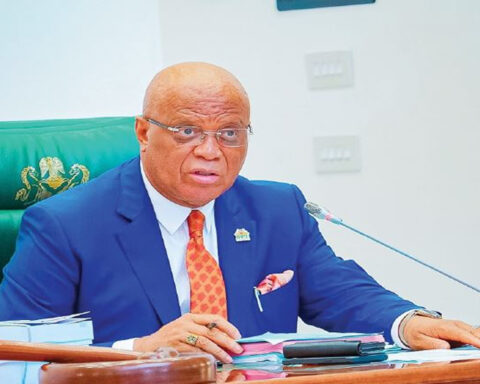
The Secretary to the Government of the Federation (SGF), Sen. George Akume,
made the call on Thursday in Abuja, at an induction programme for newly inaugurated Chairmen, Governing Board Members, and Chief Executives of the federal government institutions
Akume who was represented by Mr Mohammed Danjuma, Permanent Secretary, General Services Office, SGF, said the training was important because of the interference in the functions of the CEO’s office.
He warned that the government is concerned about the “poor and unhealthy relationships” that have emerged in some of these organisations, which he described as “unacceptable.”
The event, aimed at deepening the understanding of new policies and procedures in governance in line with the Renewed Hope Agenda of President Bola Ahmed Tinubu.
The SGF highlighted several “worrisome issues” that have arisen from what he described as “divergent interpretations” of the roles of Governing Boards.
This, according to him, includes disagreements over who is responsible for the day-to-day running of parastatals and disregard for regulations guiding board meetings.
“This has resulted in initiating unlawful disciplinary measures against CEOs and instigating labour unions as “agents of distraction.”
He clarified the distinct roles of the board and the CEO, stating that the board’s primary responsibility is to set operational and administrative policies and supervise their implementation.
He stressed: “A Board shall not be involved directly in the day-to-day management of a parastatal or agency.”
Akume defined the CEO’s core functions as the day-to-day administration of the organisation and providing strategic leadership.
He also outlined the board’s key oversight responsibilities, which include ensuring the long-term interests of the Federal Government were served.
“The Board needs to work with management to determine the organisation’s mission and long-term strategy to promoting sustainable and cost-efficient activities.
He urged all appointees to be worthy of the trust reposed in them and to embody the core values of “equity, integrity, and good governance.”
The SGF also announced that the Bureau of Public Service Reforms (BPSR) has been directed to conduct an impact assessment on the agencies whose leaders were inducted.
This assessment according to him will evaluate their compliance with extant rules and the harmony of their working relationships to ensure effective service delivery to citizens.
Akume warned that the government would not hesitate to take action against anyone who leaves the two-day induction programme halfway, noting the importance of full participation.
Mr Dasuki Arabi, the Director-General, Bureau of Public Service Reforms (BPSR) emphasised the critical role of leadership in promoting corporate governance, ethical behaviour, and institutional effectiveness across Nigeria’s public service landscape.
Declaring the programme as “a strategic national undertaking,” he noted that the induction represented not just an onboarding, but a leadership reawakening for public office holders entrusted with sensitive national responsibilities.
According to Arabi, the training content is built around objectives to strengthen public institutions for better service delivery, inclusiveness, and economic prosperity for all Nigerians.
He urged the inductees to commit fully to the learning process, collaborate with one another, and treat their leadership roles as sacred national assignments.
Mr Samson Adeniran, Senior Programme Manager with Konrad Adenauer Stiftung (KAS) Nigeria, emphasised the urgent need for consistent onboarding and capacity building for Chairmen, CEOs, and Board Members across federal parastatals, agencies, and commissions.
Speaking in an interview with newsmen, Adeniran revealed that a major challenge in governance often stems from a fundamental misunderstanding of roles and responsibilities among newly appointed board members and executive heads.
On his part, Mr Bala Mohammad, a lecturer from the Department of Mass Communication, Bayero University, Kano, called for greater clarity in public office roles in Nigeria through structured induction programmes.
Mohammed who is also a resource person at the training emphasised the dire need for such programmes to prepare public office holders for their responsibilities.
He commended the Bureau for its efforts in organising such induction programmes, which he believed could significantly reduce confusion and foster collaboration between boards and management in various government agencies.
Follow us on all social media platforms @dailyquery for news and analyses around the globe.