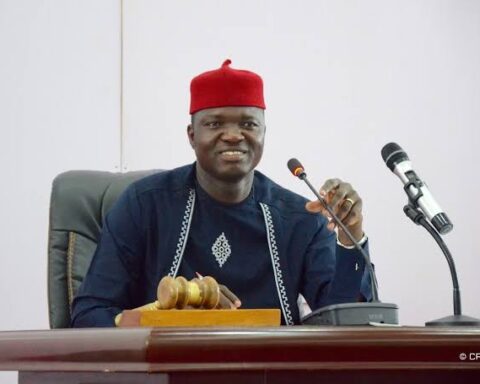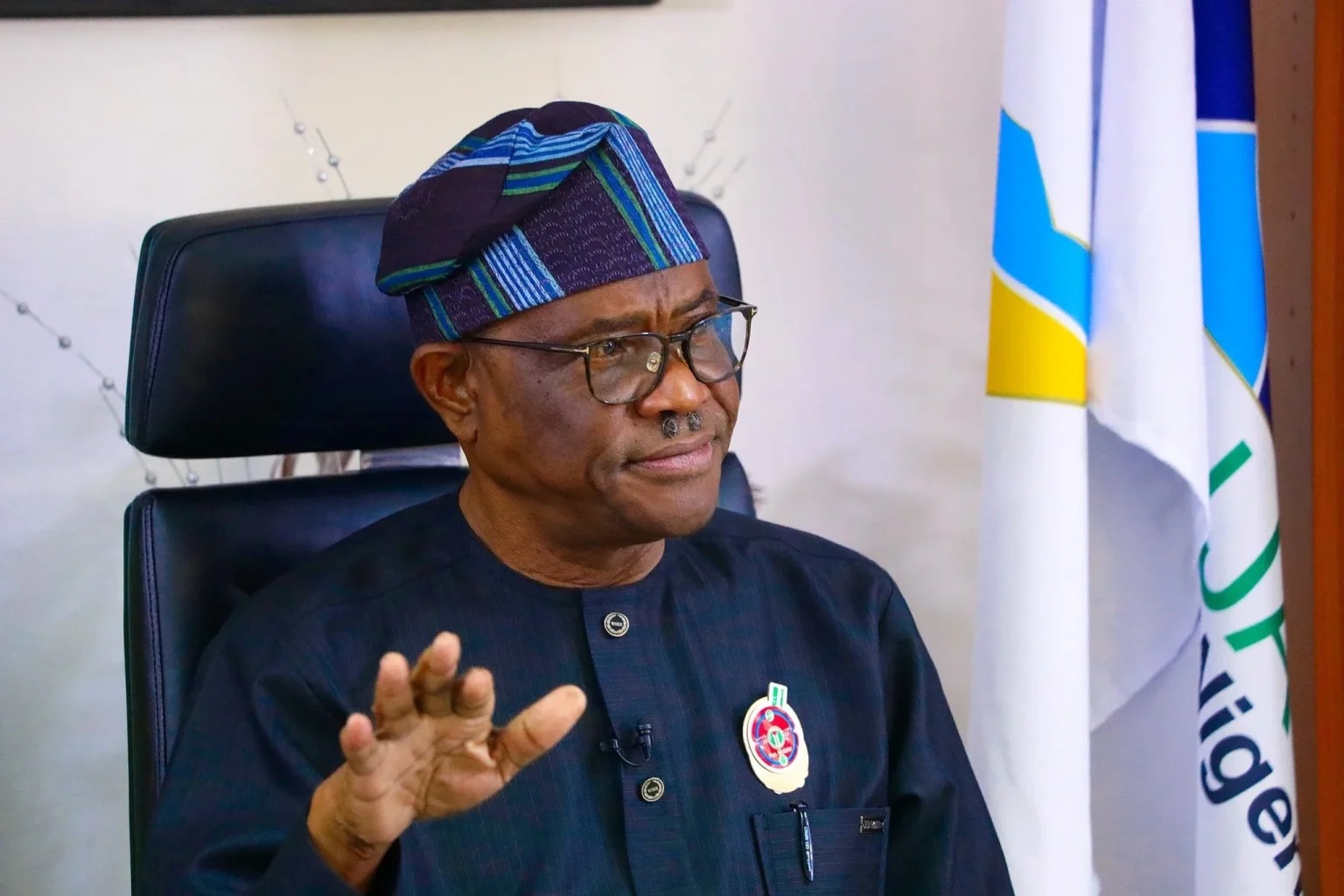
The Minister of the Federal Capital Territory (FCT), Nyesom Wike, has said his decision to block what he described as wasteful government spending and the diversion of public funds is the reason he is unpopular among some civil servants.
Wike stated that his administration had redirected funds previously used for what he termed frivolous activities, including overseas conferences and official trips, toward the construction of roads and other infrastructure projects aimed at improving the lives of residents of the Federal Capital Territory.
The minister made the remarks on Thursday during his monthly media briefing on the state of the nation in Abuja, where he defended his administration’s spending priorities and approach to governance.
According to Wike, one of the major reforms introduced under his leadership is ensuring that public funds are spent on projects that deliver visible benefits to the people rather than on unnecessary government activities.
He maintained that his refusal to approve what he considers wasteful expenditure has earned him the displeasure of some government officials and civil servants who were accustomed to such practices.
“I am not popular among civil servants because I blocked many avenues through which public funds were being diverted,” the minister said, insisting that government resources should be used responsibly to promote development.
Wike explained that instead of authorising expensive foreign trips and conferences, his administration has chosen to invest available resources in projects that directly improve infrastructure across the nation’s capital.
He argued that taxpayers’ money should be channelled into roads, public facilities and other critical infrastructure rather than being spent on overseas events that produce little or no measurable benefit.
“We waste our resources on frivolities. You expect me to approve funds for you to go for conference in America on land administration, what’s that?” Wike said during the briefing.
He questioned the rationale behind spending huge amounts of public funds to send government officials abroad for conferences when similar knowledge and practical experience could be obtained within Nigeria.
According to him, officials seeking to improve land administration and other government processes should instead study successful models already operating in cities such as Lagos and Port Harcourt.
“Go to Lagos and Port Harcourt, study how their own works or did not work and make a comparison here,” he said.
The minister maintained that local study visits would not only save government resources but also provide practical insights more relevant to Nigeria’s administrative environment than expensive overseas conferences.
Wike stressed that his administration would continue to scrutinise requests for official travel and training programmes to ensure that only activities with clear public value receive government approval.
He argued that every naira saved from unnecessary expenditure can be redirected to projects that improve transportation, public services and the overall quality of life in the Federal Capital Territory.
According to him, the emphasis of his administration is on delivering visible infrastructure that residents can see and benefit from, rather than spending scarce resources on activities with limited impact.
Since assuming office as Minister of the Federal Capital Territory, Wike has consistently highlighted infrastructure development as one of the central priorities of his administration.
Several road projects, rehabilitation works and urban renewal initiatives have been undertaken across different parts of Abuja, with the minister repeatedly stating that prudent management of public resources is essential to sustaining development.
He also reiterated his commitment to accountability and fiscal discipline, saying government officials must recognise that public funds belong to Nigerians and should therefore be managed with transparency and responsibility.
Wike’s comments come amid ongoing national conversations about government expenditure, public sector efficiency and the need to reduce the cost of governance in Nigeria.
Over the years, concerns have been raised about the large sums spent by government institutions on foreign conferences, workshops, training programmes and official travel, with many stakeholders advocating greater investment in domestic capacity building and infrastructure.
Supporters of the minister’s approach argue that reducing unnecessary government spending could free up significant resources for development projects, while critics contend that some international engagements provide valuable opportunities for knowledge exchange and professional development.
Nevertheless, Wike insisted that his administration would remain focused on prudent spending, maintaining that infrastructure development and efficient service delivery must take precedence over expenditures that do not produce tangible benefits for residents of the Federal Capital Territory.
He assured Abuja residents that his administration would continue to prioritise projects capable of improving transportation, urban development and public services while ensuring that government resources are utilised in the most effective and accountable manner possible.