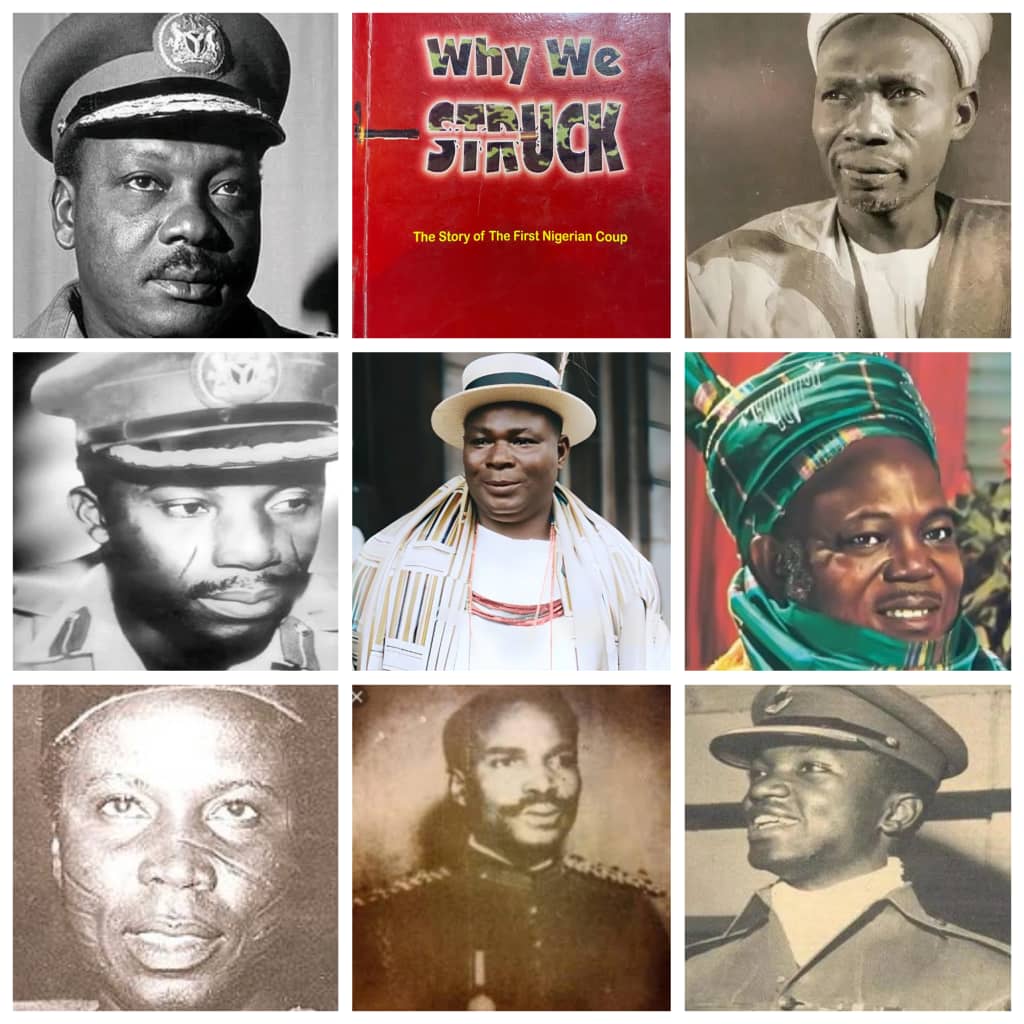
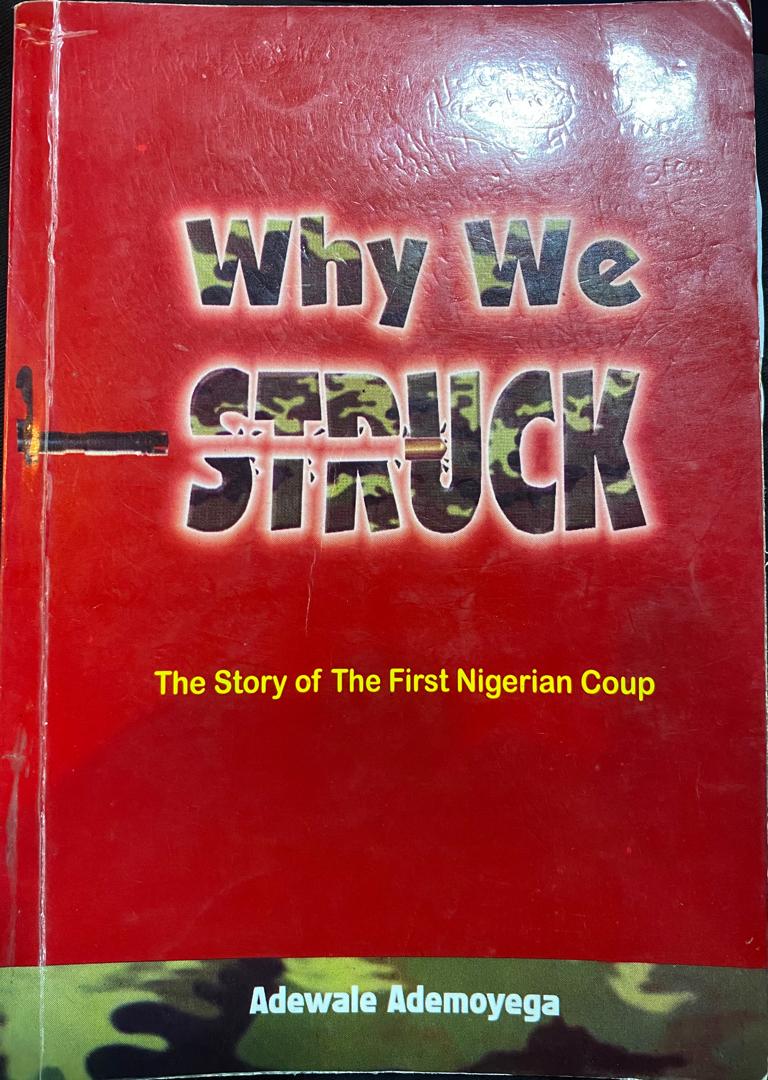
Excerpts from WHY WE STRUCK by Major Adewale Ademoyega; an active participant’s account by one of the prime movers of the military coup
Active Preparation
The preparation for the coup started to warm up by July 1965 because by that time, the matter was more seriously and urgently discussed. Moreover, active efforts were made to get in touch with more officers of the Army so as to ascertain their inclinations and loyalties. These contacts were made most quietly and surreptitiously.
A coup d’etat is not a conventional operation of the Army. Preparations for it could not at any time be done in the open or in plain language. Therefore, when we discussed with officers, unless an officer showed serious interest, we always sounded casual and the matter was generally left unspecified and inconclusive, Moreover, while Nzeogwu and I were making concerted efforts in Kaduna, Ifeajuna was pre-occupied with making similar efforts in Lagos. And the two efforts were not brought together until October 1965.
When my own branch of the NMTC was moving from Kaduna to Abeokuta in early September 1965, I left Nzeogwu with the understanding that our efforts were to continue in the South as it had been in the North. Moreover, efforts were to be made to find troops for the operation.
The biggest problem that we faced was finding troops for the operation in the South. There were only three battalions in Southern Nigeria in those days. One was stationed in Enugu under the command of Major Ogunewe who was an officer commissioned from the ranks and was known to be totally conservative, apolitical and loyal to the Belewa government.
However, Major Chude Sokei, a revolutionary minded senior officer of the unit, was our contact in Enugu. He was Sandhurst-trained. He was in touch with Ifeajuna and was willing to match his words with action. Another Battalion was located in Ibadan, a very strategic position. But the commander of the unit, Lieutenant-Colonel Largema, was aggressively committed to the Balewa Government and his unit was being used politically to suppress anti-Akintola uprisings…
It was in mid-November 1965 that we held the one and only formal meeting that preceded the coup. The meeting was held in Lagos, in the military quarters of Major Ifeajuna. Nzeogwu was there from Kaduna and I from Abeokuta. Major Chude Sokei was there from Enugu. Others were from Lagos, i.e. Okafor of the Federal Guards Company, Anuforo and Chukwuka from the Army Headquarters.
The meeting was very short. There was a consensus amongst us that something had to be done quickly to save Nigeria from anarchy and disintegration and to restore peace and unity to the nation. It was agreed that only the use of force could bring immediate end to the violence being perpetrated in many parts of the country. It was, however, agreed that the use of force should be minimal. Political leaders and their military collaborators were to be arrested, but whenever an arrest was resisted, it was to be met with force. Otherwise, no one was to be killed.
Only the heads of government, that is, the Prime Minister, the four regional premiers and their right hand men, were considered most essential to arrest throughout the country. And amongst their military collaborators, only the top echelon and those holding strategic positions were named for arrest. These included the GOC of the Nigerian Army, General Ironsi, the commanders of the two Brigades, Brigadiers Ademulegun and Maimalari; the Chief of Staff Army HQ, Colonel Kur Muhammed, and the Adjutant General of the Army, Lieutenant-Colonel Pam. Others Shodeinde, the Quartermaster-General of the Army, Lieutenant-Colonel Unegbe and the Commander of the 4th Battalion which was based in Ibadan and was the most politicized unit of the Army., Lieutenant-Colonel Largema.